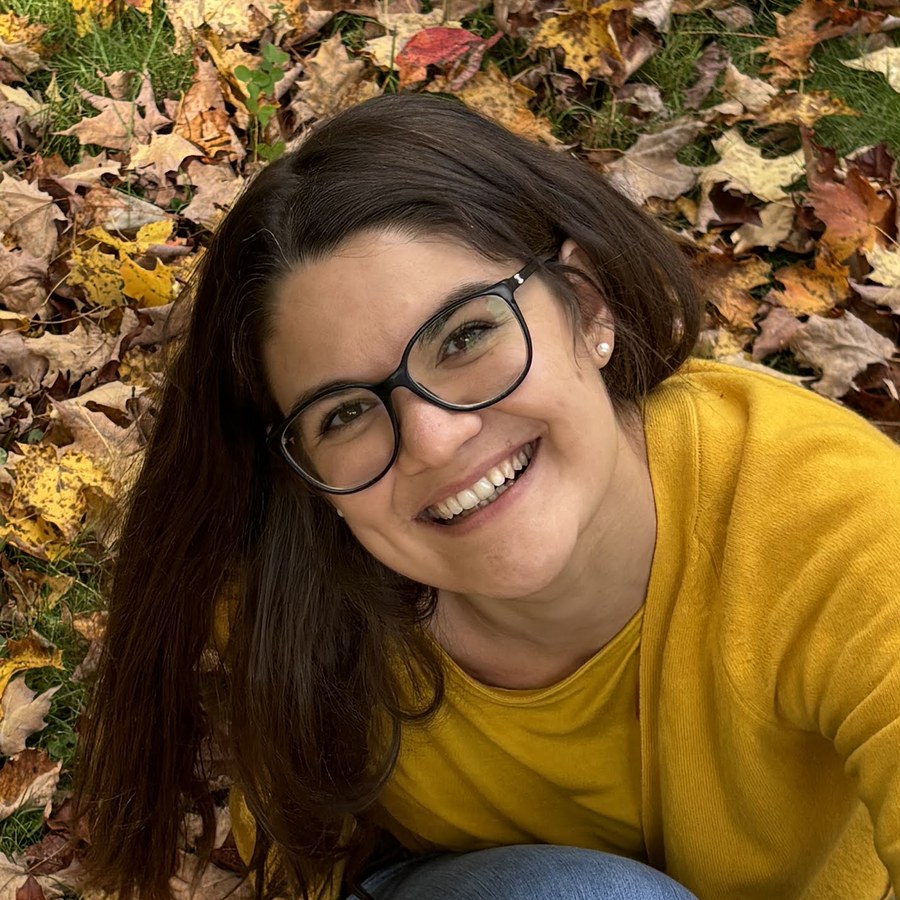
Gaia Grosso
Postdoctoral Associate
Laboratory for Nuclear Science (MIT)
School of Engineering and Applied Sciences
(Harvard SEAS)
Learning begins where expectation fails.
I am a physicist working across statistics and machine learning. I build methods that decide — rigorously — when data contain something a model did not predict. I did my PhD at CERN, and after that joined IAIFI as a postdoctoral Fellow, working with Philip Harris (MIT LNS) and Demba Ba (Harvard SEAS).
I am on the 2026–27 faculty job market. I am looking for positions where statistical methodology, machine learning, and the physical sciences meet — get in touch.
Research
An anomaly is not always visible one observation at a time. A loaded die looks fair on any single throw and gives itself away only in the frequencies of many — and the same holds for new fundamental interactions distorting the distributions of particle collisions, or for a language model whose behaviour has drifted in ways no single output reveals. Classical tests answer that question rigorously but lose power when deviations are rare or buried among uninformative features. I build tests that scale without giving up the calibrated p-value or the account of what produced it.
News
Contact
I am glad to hear from students and researchers interested in anomaly detection — whether the data comes from a collider, a telescope, or a language model.